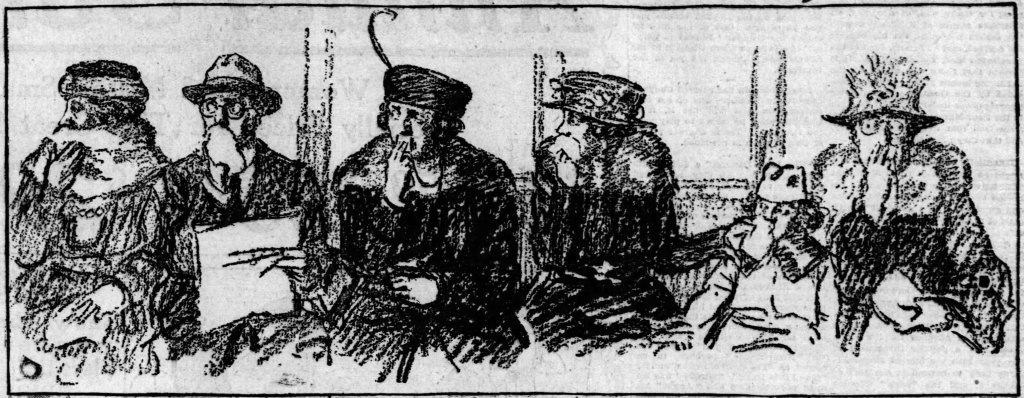
The 1918 influenza pandemic swept across the globe, sickening one-third of the world’s population, or about half a billion people, by the end of its terrifying run.
At least 50 million people — including 675,000 in the United States — were killed by this strain of the H1N1 virus.
Despite being referred to as “Spanish flu,” there is no evidence the pandemic began in Spain. Researchers don’t know its true origin but only that it spread throughout the world from 1918 to 1919.
Diagnosing and caring for the sick was challenging. At the time, no test or vaccine existed, and neither did breathing machines. Doctors could do little but provide supportive care.
The virus claimed the lives of healthy people. There were high mortality rates among those 20 to 40 years old. As John M. Barry, author of “The Great Influenza: The Story of the Deadliest Pandemic in History,” told the Tribune in 2004, healthy young adults died more often than the very young or the very old because the viral invader would provoke a hyperactive response from their robust immune systems. The resulting immune “storm” would fill the lungs with debris and end up killing the patient.
Though occuring more than 100 years apart, there are many similarities between the 1918 flu pandemic and the current coronavirus crisis.
CLICK HERE TO VIEW THE PROJECT
My role
I searched through thousands of pages of the Chicago Tribune from Jan. 1, 1918 through Dec. 31, 1918, to get a better understanding of how that pandemic affected the Chicago area. Then, I used those key dates and moments to compare with similar events occurring during the current coronavirus crisis.
My frequent collaborator, Marianne Mather, assisted in the search for images related to these events.
 Kori Rumore